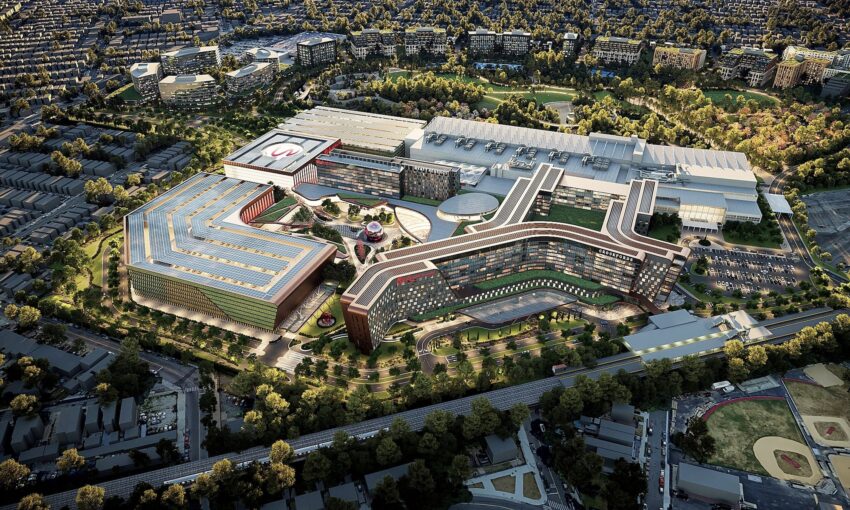
New York City is poised to get its first Vegas-style casinos, including one next to the home stadium of baseball’s New York Mets and another that could result in a significant windfall for former President Donald Trump. Three casino proposals were approved by a key state panel on Monday for lucrative gambling licenses.
No casinos will be built in Manhattan, however, as several competing proposals have already been scrapped. This includes a highly publicized plan backed by Jay-Z in the heart of Times Square. The state Gaming Commission is expected to formally issue the licenses before the end of the year, with gambling revenues already factored into the state budget.
Democratic Governor Kathy Hochul praised the projects, stating they could unlock billions of dollars for the state’s transit system and create new jobs. However, opponents warn that easy access to casinos may lead to increased gambling addiction.
### Trump Could Benefit from Bronx Casino License
Former President Donald Trump could receive up to $115 million tied to Bally’s $4 billion casino plan at the Ferry Point golf course in the Bronx. Bally’s acquired operating rights for the city-owned golf course from the Trump Organization in 2023 and agreed to pay the additional money if it won the casino license. The Trump Organization did not respond to requests for comment.
### Mets Owner’s Hard Rock Casino Proposal in Queens
In nearby Queens, billionaire Mets owner Steve Cohen proposed an $8.1 billion Hard Rock casino complex on a parking lot adjacent to Citi Field. The plan includes a performance venue, hotel, and retail space, promising a major entertainment hub.
### Resorts World’s Expansion at Aqueduct Race Track
Resorts World proposes investing over $5 billion to expand its existing slots parlor into a full casino at Aqueduct Race Track in Queens, near John F. Kennedy International Airport. The project includes added hotel accommodations, dining, and entertainment options.
### Market and Economic Impact
The Gaming Facility Location Board cited the region’s dense and affluent population combined with high tourism as factors supporting three full casinos in close proximity. Consultants estimated that these casinos could generate a combined $7 billion in gambling tax revenues between 2027 and 2036, plus $1.5 billion in licensing fees and nearly $6 billion in state and local taxes.
Despite this promising outlook, the board described the projects’ timelines as “ambitious.” The racetrack expansion aims to open some facilities as early as March, while the Citi Field and Ferry Point projects are targeting openings by 2030.
### Background and Context
The commission is authorized to license up to three casinos in the New York City area after a 2013 voter-approved referendum allowed casino gambling statewide. Currently, there are four full casinos offering table games—all located upstate—and nine gambling halls without live table games, many miles from Manhattan.
Alan Woinski, a New Jersey-based gambling consultant, believes the New York City market “should be deep enough” to sustain the three planned resort casinos along with two existing slots parlors just outside the city in Yonkers and on Long Island. However, he cautioned that early financial projections often fall short, noting that he hasn’t seen a casino meet its initial revenue targets in many years.
John Holden, a business professor at Indiana University specializing in gambling law, said the New York City market has no national equivalent, making projections uncertain. He added that it was unsurprising for the panel to recommend all three projects for licenses, given their considerable resources and expertise.
### Opposition and Community Concerns
Anti-casino protesters disrupted Monday’s meeting in Manhattan with chants of “Shame on you! Shame on you!” before being escorted out. Jack Hu, one of the group’s organizers, expressed concerns that the proposals would disproportionately impact the city’s Asian American communities, which are primarily concentrated in Queens.
Hu criticized casino operators for targeting older Asian adults and workers as “cash cows to milk for money.” He said, “They bus our seniors to casinos, and they give them meal and gambling vouchers in the hopes that they’ll stay long enough to lose their entire Social Security check.”
—
These new casino projects are set to transform New York City’s gambling landscape, promising significant economic benefits while sparking ongoing debate about their social impact. The coming months will be crucial as the state Gaming Commission finalizes licensing and development plans.
https://www.syracuse.com/betting/2025/12/state-backs-3-new-nyc-casinos-including-1-near-mlb-stadium-1-at-former-trump-golf-course.html